Africa
A first safari: where to go and when
A safari day starts before dawn, with coffee by the fire and a drive out as the light comes up and the animals are moving. A good guide reads the bush as they go: fresh tracks in the sand, an impala's alarm call, vultures dropping out of the sky. The middle of the day is for rest; the afternoon drive ends with a drink as the sun goes down, and in a private concession the silence after dark is complete.
First-timers are surprised by how close the animals come, how much there is beyond the big cats, and how tired they are by nine. The place and the month shape all of it: open plains or thick bush, herds or leopards, canoes or vehicles, a crowd or nobody.
Needful Travel BureauUpdated 5 min read
Where to go
Natural Earth · MapLibre
Showing the map overview. Use the arrows to pan when the map has focus.
- Maasai Mara and its conservancies
- Laikipia
- Serengeti
- Ngorongoro Crater
- Sabi Sand and Greater Kruger
- Madikwe Game Reserve
- Okavango Delta
- Volcanoes National Park
- South Luangwa National Park
- Kenya
- Tanzania
- South Africa
- Botswana
- Rwanda
- Zambia
Kenya
Kenya packs a lot into a short trip, with the Mara about an hour's flight from Nairobi and Laikipia a short hop north.
Maasai Mara and its conservancies
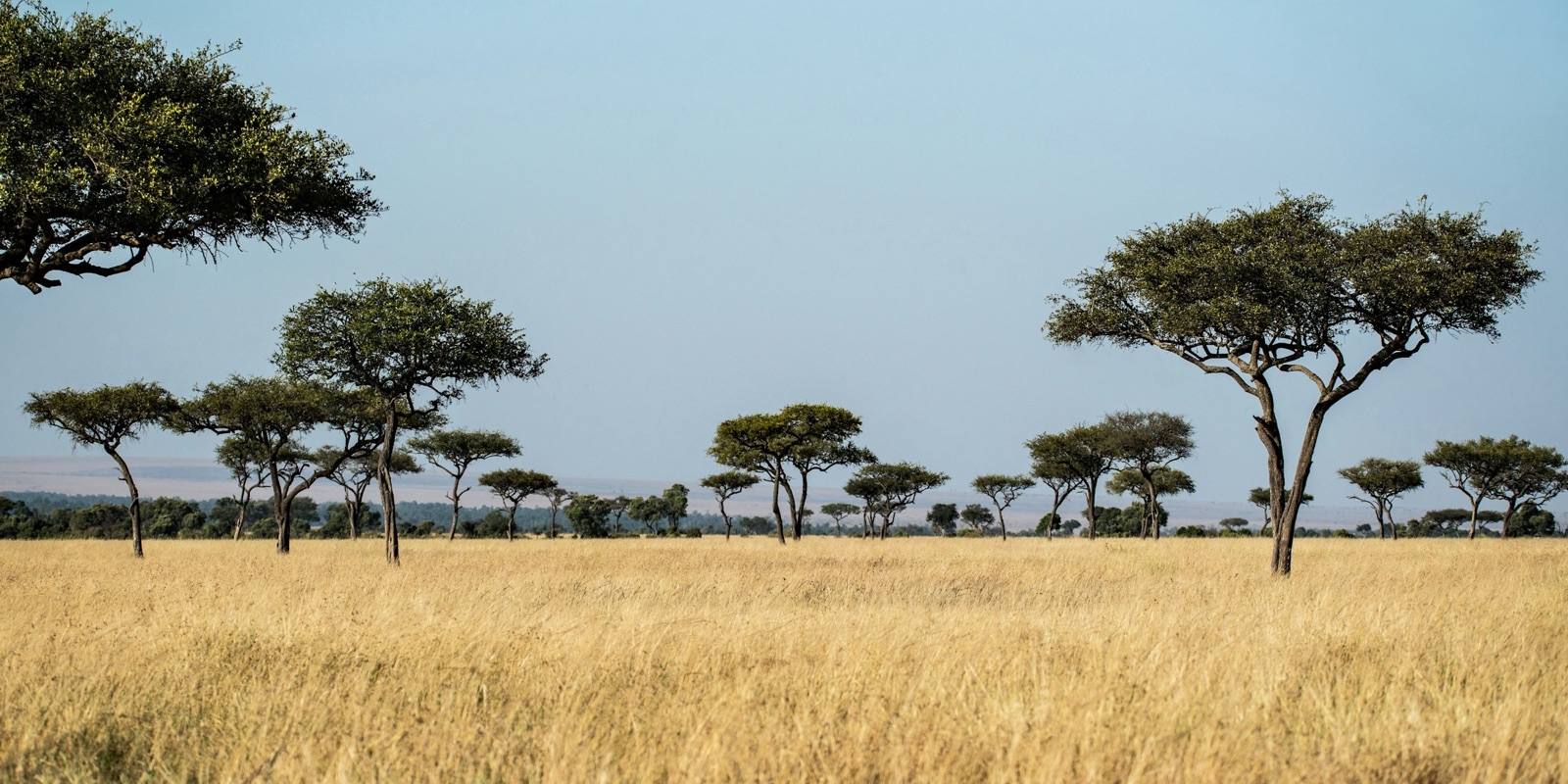
Go for lion and cheetah on open grassland, seen most days, and the river crossings.
Skip it if you want the crossings without a crowd: in August dozens of vehicles line the banks.
Worth knowing. Stay in a conservancy, where vehicles are capped at sightings and off-road and night drives are allowed. Crossings can take days; give it four nights.
Best months. July to October for the migration; January to March for quieter, dry days.
Where to stay
- Mahali Mzuri: a conservancy camp, through Virtuoso
- The Ritz-Carlton, Masai Mara Safari Camp: through Marriott
Laikipia
Go for Grévy's zebra and reticulated giraffe, found in few other places, with wild dog and rhino, and safaris on foot, horseback or camel.
Skip it if it is your only stop and you want the great herds: pair it with the Mara.
Worth knowing. Every property is a private conservancy, so night drives and off-road driving are routine. Nights are cooler than in the Mara.
Best months. June to October and December to March, the dry months.
Where to stay
- Elewana Loisaba Tented Camp: tents and star beds, through Virtuoso
Tanzania
Tanzania is the bigger, wilder stage, where the herds spend most of the year.
Serengeti
Go for the herds, here most of the year, on plains that dwarf the Mara.
Skip it if you have three nights or fewer: the park is vast and the herds move.
Worth knowing. Herds calve around Ndutu from January to March, reach the western corridor by June and cross the Mara River from July to October. Concessions such as Grumeti drive off-road and at night.
Best months. January to March, and June to October.
Where to stay
- Singita Grumeti: a western-corridor concession, through Singita
- Four Seasons Safari Lodge Serengeti: good with children
Ngorongoro Crater
Go for a day on a crater floor full of game, with one of the best chances in East Africa of black rhino.
Skip it if you want wilderness: vehicles crowd the floor, and the rhino are usually seen at a distance.
Worth knowing. There are no giraffe on the floor. The rim is cold at night; one night on the way to the Serengeti is enough.
Best months. June to October; the game stays all year.
Where to stay
- The Manor at Ngorongoro: a lodge on a coffee estate, through Virtuoso
South Africa
South Africa is the easiest first safari, with good roads, short flights and close views of leopard.
Sabi Sand and Greater Kruger
Go for leopard, seen close and often, and the Big Five in private reserves open to Kruger, with off-road tracking and spotlit drives after dark.
Skip it if you want open plains and big herds: this is thick bush.
Worth knowing. The area carries malaria, so families with young children should choose Madikwe. With children, a private vehicle lets you cut drives short.
Best months. May to October, the dry winter; November to April is green and hot.
Where to stay
- Londolozi: through Virtuoso
- Singita Sabi Sand: through Singita
- Lion Sands: through Virtuoso
Madikwe Game Reserve
Go for the Big Five without malaria, on the Botswana border, with resident packs of wild dog.
Skip it if you want the scale and history of Kruger: Madikwe is a younger reserve restored from farmland.
Worth knowing. Only lodge guests may enter, so traffic is light, and many lodges run programmes for children. It is about four hours' drive from Johannesburg, or a short flight.
Best months. May to September, dry and clear; June and July nights are cold.
Botswana
Botswana keeps visitor numbers low by policy, so its wilderness feels empty and is priced accordingly.
Okavango Delta
Go for water and land together: mokoro, a poled dugout canoe, boats, walks and drives in quiet private concessions.
Skip it if you dislike small planes or need value: light aircraft are the only way in.
Worth knowing. The flood, from Angolan rain, peaks around July, in the dry season. Concessions allow off-road and night drives; Moremi Game Reserve does not.
Best months. June to October; November to March for lower rates and newborns.
Where to stay
- Xigera Safari Lodge: through Virtuoso
- Eagle Island Lodge: through Belmond
- Singita Elela: through Singita
Rwanda
Rwanda is for the gorillas, best added after a few days on the plains.
Volcanoes National Park
Go for an hour with a habituated family of mountain gorillas, which many people rank above anything on the plains.
Skip it if you cannot climb steep, muddy ground at altitude for hours, or anyone in your party is under 15.
Worth knowing. Groups are capped at eight people and one hour. The walk in takes from under an hour to most of the day; hire a porter.
Best months. June to September and December to February, the drier months.
Where to stay
- One&Only Gorilla's Nest: through Virtuoso
- Singita Kwitonda Lodge: through Singita
Zambia
Zambia is where walking safaris began, for people who want to be on foot.
South Luangwa National Park
Go for walking safaris, which began here in the 1950s, and spotlit night drives inside the national park, where leopard are the prize.
Skip it if you want open plains, or are travelling from December to April, when many bush camps close for the rains.
Worth knowing. You fly from Lusaka to Mfuwe, at the park's edge. Thornicroft's giraffe live only in this valley. It pairs well with Victoria Falls.
Best months. June to October; September and October are hottest, with game crowded at the river.
Our insight
What we would tell a client before they book.
Fewer camps, longer stays. Two camps over six nights beat four camps over the same time. Every move costs half a day in transfers, and the best sightings come once a guide knows what you want to see.
A conservancy changes the Mara. In the reserve you share sightings and leave the park by dusk. In a conservancy vehicles are capped at each sighting and you can drive off-road, at night and on foot; drive into the reserve only for the crossings.
The migration in June. From late May to June the herds are usually in the Serengeti's western corridor, not the Mara. River crossings in the Mara start in July in most years, depending on the rains.
Southern Africa's green season. From November to March in the Sabi Sand and the Okavango, rates fall, the bush fills with young animals and storms clear the air. The cost is longer grass and harder tracking.
Small planes and booking ahead. Light aircraft link most camps, with luggage limits of about 15 to 20 kg a person in soft bags. Book July to October and Christmas nine to twelve months ahead, and secure gorilla permits before the flights.
At a glance
| Place | Best for | What you will not get | Best months |
|---|---|---|---|
| Maasai Mara and its conservancies | Big cats on open grassland and the river crossings; not solitude in the reserve in August. | Solitude in the reserve in August | July to October for the migration; January to March for quieter, dry days. |
| Laikipia | Rhino, wild dog and riding or walking safaris; not the migration. | The migration | June to October and December to March, the dry months. |
| Serengeti | The migration in a far larger, quieter landscape than the Mara; not a short trip. | A short trip | January to March, and June to October. |
| Ngorongoro Crater | A day of dense game and a chance of black rhino; not wilderness. | Wilderness | June to October; the game stays all year. |
| Sabi Sand and Greater Kruger | Leopard at close range and the Big Five; not open plains or great herds. | Open plains or great herds | May to October, the dry winter; November to April is green and hot. |
| Madikwe Game Reserve | A malaria-free Big Five safari with young children; not the scale of Kruger. | The scale of Kruger | May to September, dry and clear; June and July nights are cold. |
| Okavango Delta | Water and land in empty private concessions; not for small-plane nerves or a tight budget. | For small-plane nerves or a tight budget | June to October; November to March for lower rates and newborns. |
| Volcanoes National Park | An hour with mountain gorillas; not for anyone who cannot climb, or under-15s. | For anyone who cannot climb, or under-15s | June to September and December to February, the drier months. |
| South Luangwa National Park | Walking safaris and night drives; not open plains or the wet season. | Open plains or the wet season | June to October; September and October are hottest, with game crowded at the river. |